
Flat Roofing
Flat Roofing in South Bend, IN
Flat roofing in South Bend, IN, is a drainage question before it is a material question: low-slope roofs shed water slowly, so drains, slope, seams, and flashing decide whether the roof stays dry. This page compares three common low-slope systems, EPDM, TPO, and modified bitumen, as general education. It describes systems generally and does not state which systems Quality Roofing LLC installs. For the commercial context, see commercial roofing; for pitched roofs, see shingle roofing. Call (574) 901-6308 during business hours.
Service overview
Flat and Low-Slope Roofing, Explained Generally
A flat roof is rarely flat. Low-slope roofs are built with slight falls toward drains, scuppers, or edges, and the covering is a continuous membrane or multi-layer system rather than overlapping pieces. Water that stands on a low-slope roof, known as ponding, loads the structure, works on seams, and finds the weakest flashing. The flat versus pitched post compares the two forms from the building-owner side.
This page describes three systems generally: EPDM, a single-ply rubber membrane; TPO, a single-ply membrane with heat-welded seams; and modified bitumen, a multi-layer asphalt-based system. The descriptions are educational comparisons. They do not state which systems Quality Roofing LLC installs, and no system is presented here as the business's offering. The rubber versus TPO post compares two of the three in more detail. What follows applies to any low-slope roof, whatever system covers it: drainage, seams, flashing, and parapets.
What decides outcomes
Four Things That Decide a Flat Roof
These four decide outcomes on any low-slope roof, whatever system covers it.
Drainage first
Slope to drain, drain capacity, and scupper placement decide whether water leaves. Ponding after rain is the visible symptom of a drainage question, and it is investigated before any material question is asked.
Seams and flashing
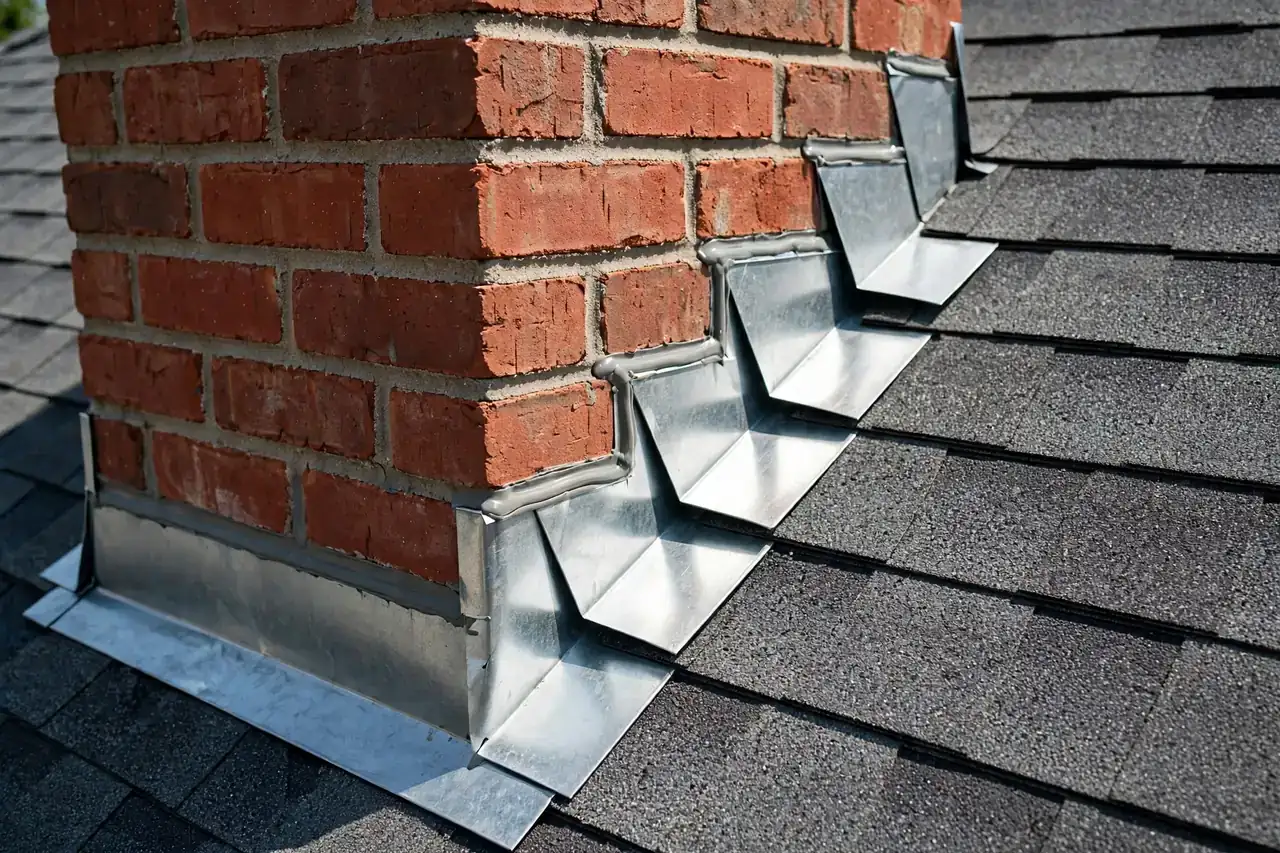
Membrane seams and flashing at edges, penetrations, and equipment are the joints of a flat roof. Seams fail progressively, and flashing at a parapet or curb moves with the building, so both are checked across the whole roof.
Parapet and wall transitions
Where the roof meets a parapet or wall, the membrane turns up and is terminated and flashed. These transitions concentrate movement and water, and they are a common leak source on low-slope roofs.
Access and foot traffic
Flat roofs are walked on for maintenance, equipment, and access, and foot traffic wears membranes and opens seams. How the roof is used belongs in the conversation alongside how it is covered.
How the work proceeds
How a Flat Roofing Conversation Proceeds
The sequence below is the usual shape of a flat roofing conversation, from the first look to the record left behind.
STEP 01
Discuss and inspect
The roof surface, drainage, seams, and flashing are checked, the history taken down, and the question stated: a leak, ponding, a system comparison, or a whole-roof assessment.
Systems compared
EPDM, TPO, and Modified Bitumen, Compared Generally
EPDM, generally
EPDM is a single-ply rubber membrane, laid in large sheets with seams joined by adhesive or tape, and held by ballast, mechanical fixing, or adhesion. Its character is flexibility and a long record of use. This description is general education, not a statement of what this business installs.
TPO, generally
TPO is a single-ply membrane whose seams are heat-welded, forming a fused joint rather than a glued one. Its character is welded seams and a lighter surface. This description is general education, not a statement of what this business installs.
Modified bitumen, generally
Modified bitumen is a multi-layer asphalt-based system, applied in plies with heat or adhesive, often with a mineral surface. Its character is layered redundancy: more than one ply stands between weather and deck. This description is general education, not a statement of what this business installs.
Seams, compared
Seam behavior differs by system: adhered or taped seams, heat-welded seams, and layered ply joints each age and fail differently. Seam condition is checked across the whole roof on any low-slope assessment, whatever the system.
Surfaces, compared
Lighter surfaces reflect more sunlight than darker ones, which bears on heat gain and on how the surface ages. The comparison is general, and no product or performance claim is made here for any specific surface.
Drainage and ponding
Ponding, water standing on the roof long after rain stops, loads the structure and works on seams. Slope, drain placement, and drain condition are investigated before material questions. Drainage correction is scoped from findings, not assumed.
Insulation and ventilation, generally
Insulation below the membrane and ventilation of the assembly beneath bear on condensation and on energy behavior. No insulation target figure is stated here, since published guidance and code-minimum framings conflict. The questions are asked; the figures are sourced separately.
Parapets and terminations
Where the membrane turns up a parapet or wall, termination bars, flashing, and sealant hold the edge. Parapet caps, masonry condition, and the flashing behind them are checked together, since a parapet leak can travel far from its source.
Drains and scuppers
Internal drains, scuppers, and overflow paths are the exit routes for water, and their blockage or failure is a common flat-roof problem. Drain strainers, leaders, and the paths below the roof are part of the same inspection.
Choosing: questions to ask
What does the drainage assessment show? What is the condition of seams and flashing? How is the roof used and walked on? What does the building's form allow? Those questions precede any system discussion, and the system descriptions above inform them without deciding them.
Where flat roofing fits
Flat Roofing Situations in South Bend
A garage or addition with a low slope
A low-slope garage or addition roof ponds after rain and leaks at the wall joint. The drainage assessment comes first, then the seam and flashing findings, then the scope.
A downtown commercial core building
Downtown commercial buildings predominantly carry flat or low-slope roofs as a general-practice inference, not as evidenced South Bend data. Access, phasing, multi-tenant coordination, and parapet questions are hypotheses needing a building inventory, covered on the commercial roofing page.
Ponding after rain
Water stands on the roof long after rain stops. Slope, drains, and scuppers are investigated, and the membrane and seams checked for the wear ponding causes. The scope follows the drainage findings.
An aging membrane with questions
The membrane shows wear, seams are opening, and flashing is lifting. The assessment weighs repair against replacement on findings across the whole roof, with the system descriptions above as background, not as a prescription.
South Bend context
Flat Roofing Against South Bend Buildings and Weather
Flat and low-slope roofs in South Bend sit mostly in the commercial core and on garages, additions, and porches, while the housing stock is predominantly pitched. The downtown commercial core, the riverfront, and the postwar ring each present different low-slope questions. Lake-effect snow, with a 1991–2020 normal of 64.5 inches and a range from 39.0 inches in 2021 to 91.8 inches in 2022, loads low-slope roofs and feeds the freeze-thaw cycle at drains. Neighborhood notes below link to the Downtown and Howard Park–East Bank pages.
Downtown / Central Business District
The commercial core only, framed by the 2016 Parking Study CBD Zone and labelled as such. Masonry commercial buildings, two to three stories early and taller later, predominantly carry flat or low-slope roofs as a general-practice inference. No residential stock profile is claimed. Read the Downtown roofing notes.
Howard Park–East Bank
Downtown-adjacent riverfront stock combining older buildings, 2019 townhomes, and industrial adaptive reuse, including a converted warehouse. Converted industrial roofs present their own low-slope questions. Read the Howard Park–East Bank roofing notes.
River Park
East-side stock developed primarily 1920–1960, with a commercial corridor overlay along the main avenue. Low-slope questions here attach to garages, additions, and the corridor buildings. Read the River Park roofing notes.
LaSalle Park
West-side stock divided by North Sheridan Street, with a 150-unit housing complex under rehabilitation. Low-slope questions attach to multi-unit and accessory buildings. Read the LaSalle Park roofing notes.
Kennedy Park
West-side stock under a City plan adopted in September 2022, with a park, a church, and a community center among its anchors. Institutional and multi-unit low-slope roofs are part of the picture. Read the Kennedy Park roofing notes.
Snow load
The code design values include a 30 psf ground snow load. Snow standing on a low-slope roof loads the structure and the drainage system together, and drifted snow loads some areas more than others.
Freeze-thaw at drains
Repeated freezing and thawing works on drains, scuppers, and seams. Drain condition is checked with the membrane, since a frozen or blocked drain turns a roof into a pond.
Wind
The design wind speed is 115 mph, and the June 23, 2019 EF2 tornado in Gulivoire Park is the dated local wind event. Edge flashing and membrane attachment are what hold a low-slope roof against wind uplift.
Permits
Re-roofing is permitted work through the joint Building Department, and the roof replacement page carries the permit education in full, including the COA-before-permit sequence in the HP Overlay.
Problems we solve
Flat Roof Problems Addressed in South Bend
Each problem below starts with a drainage and seam assessment. The scope follows the findings.
Ponding water
Water standing long after rain points to slope or drain questions. The drainage assessment comes first, and the membrane and seams are checked for the wear ponding causes.
Seam and flashing leaks
Opening seams and lifting flashing admit water across a low-slope roof. The joints are checked across the whole roof, since neighboring seams share age and exposure.
Blistering and surface wear
Blisters, ridges, and surface wear on a membrane point to trapped moisture, movement, or age. The finding is weighed across the whole roof before any scope is written.
Blocked drains
A blocked drain or scupper turns a roof into a pond. Drain strainers, leaders, and overflow paths are checked as part of the same inspection, with the gutter cleaning page covering the drainage side.
A practical standard for every visit.
Clear planningPrepared arrivalsCareful workLocal follow-through
What to expect
What a Flat Roofing Conversation Covers
A flat roofing conversation covers the drainage assessment, the seam and flashing findings, the system descriptions as general education, and the scope that follows. Quality Roofing LLC is a South Bend roofing contractor at 63251 Mulberry Rd, reachable by phone at (574) 901-6308 during listed hours. The flat versus pitched post and the commercial roofing page carry the same ground for building owners.

Neighborhood pages
Neighborhood Pages for South Bend Roofing Notes
Downtown South BendNear NorthwestRiver ParkHoward ParkSunnymedeKeller ParkEdison ParkLincoln ParkLaSalle Park
See all neighborhood pages Notes from local customers
What South Bend Homeowners Say
Outstanding people to work with. Great price and workmanship. Clean up was exceptional, very professional company.
I could not have asked for a better crew to redo my roof! They were kind, respectful, cleaned up everything when they finished. My roof looks awesome!
Quality Roofing did a great job on our roof. They showed up as promised and our roof was completed in 2 days, including tearing off the old shingles, and replacing several sheets of plywood. We are very happy with their work.
EPDM is a single-ply rubber membrane with adhered or taped seams. TPO is a single-ply membrane with heat-welded seams. Modified bitumen is a multi-layer asphalt-based system. This page describes the three generally as a comparison; it does not state which systems Quality Roofing LLC installs.
Ponding usually traces to slope, drain placement, or drain condition: water cannot leave as fast as it arrives, or the falls toward the drains are insufficient. A drainage assessment, looking at slope, drains, and scuppers together, is the first step, before any material question.
This page does not state that. The system descriptions here are general education, and the question of which systems the business installs is one to ask directly on a call, so the answer comes from the business rather than from a web page.
Downtown commercial buildings predominantly carry flat or low-slope roofs as a general-practice inference, and the considerations include access, phasing, multi-tenant coordination, and parapet and masonry questions. Those are hypotheses needing a building inventory, covered on the commercial roofing page.
Keep exploring
Related Services
Call during business hours
Talk About Flat Roofing in South Bend
Call Quality Roofing LLC at (574) 901-6308 during listed hours: Mon–Fri 7 AM–7 PM, Sat 8 AM–8 PM, Sun Closed. Describe the roof, the drainage, and what has been noticed, and the conversation starts from the assessment.
Start with the basics
Contact Quality Roofing LLC
Call Quality Roofing LLC at (574) 901-6308 during business hours: Mon–Fri 7 AM–7 PM, Sat 8 AM–8 PM, Sun Closed. Phone is the contact channel for this business. The office address is 63251 Mulberry Rd, South Bend, IN 46614.